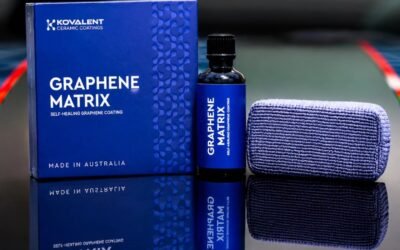
In today’s automotive world, maintaining that flawless, showroom shine is no longer just about regular washing, it’s about smart, long-term protection. This is where car ceramic coating and graphene ceramic coating step in as industry-leading solutions.
But with both options claiming superior performance, many car owners and detailing professionals find themselves asking: Which one is actually better? The answer isn’t as straightforward as it seems.
This guide breaks down the differences, benefits, and ideal use cases for both coatings, helping you choose the right solution for your vehicle, whether it’s a daily driver or a high-performance machine.
What is Car Ceramic Coating?
Car ceramic coating is a liquid polymer applied to a vehicle’s exterior that chemically bonds with the paint, creating a protective layer. This layer enhances gloss while shielding the surface from environmental damage.
Key Features of Ceramic Coating for Cars
- Hydrophobic surface (water beading effect)
- UV resistance to prevent fading
- Protection from dirt, bird droppings, and contaminants
- Long-lasting shine and gloss
Ceramic coatings have become a staple in car detailing and ceramic services due to their durability and aesthetic appeal.
What is Graphene Ceramic Coating?
Graphene ceramic coating is an advanced evolution of traditional ceramic coatings. Infused with graphene, a highly conductive and strong material, it enhances durability and performance.
Key Features of Graphene Ceramic Coating
- Improved heat dissipation
- Reduced water spotting
- Enhanced durability and strength
- Anti-static properties (repel dust more effectively)
Graphene coatings are gaining popularity among enthusiasts and professionals looking for next-level protection.
Car Ceramic Coating vs. Graphene Ceramic Coating: Key Differences
Choosing the right protection for your vehicle ensures its paint remains pristine against environmental damage. While both options utilise nanotechnology to create a protective barrier, their chemical compositions offer distinct advantages.
1. Durability and Longevity
Traditional ceramic coatings utilise silicon dioxide ($SiO_2$) to create a hard, sacrificial layer. This protection typically lasts between 2 and 5 years with proper maintenance. Graphene coatings incorporate a honeycomb lattice of carbon atoms. This structure increases tensile strength and flexibility, often allowing the coating to outlast standard ceramic alternatives.
2. Water Spot Resistance
A common drawback of $SiO_2$ coatings is their susceptibility to water spotting. The surface can hold onto heat, causing mineral-rich water to evaporate quickly and leave deposits. Graphene possesses high thermal conductivity. It dissipates heat across the surface, significantly reducing the formation of stubborn water spots in high-mineral areas.
3. Heat Resistance and UV Protection
Ceramic coatings provide a reliable shield against UV rays, preventing paint oxidation and fading. However, graphene coatings excel in extreme temperatures. Their ability to manage heat makes them a superior choice for vehicles in hot climates, as the coating remains stable and effective even under intense sunlight.
4. Gloss and Finish
Both coatings enhance the visual appeal of a vehicle. Ceramic coatings are famous for creating a “wet look” with a bright, glass-like shine. Graphene coatings often produce a different aesthetic, characterised by a deeper, richer tone that makes dark colours appear more intense.
5. Cost and Accessibility
Ceramic coatings remain the industry standard due to their widespread availability and cost-effective price points. Graphene is a premium, relatively new material in the detailing world. Because the manufacturing process for graphene dispersion is complex, these coatings carry a higher upfront cost.
| Feature | Car Ceramic Coating (SiO2) | Graphene Ceramic Coating |
| Main Component | Silicon Dioxide | Graphene-infused $SiO_2$ |
| Typical Lifespan | 2 to 5 Years | 5+ Years |
| Water Spotting | Prone to mineral deposits | High resistance (low water spotting) |
| Heat Dissipation | Retains surface heat | High thermal conductivity |
| UV Protection | Strong | Superior |
| Visual Effect | High-gloss, “glass” finish | Deep, rich, and dark lustre |
| Cost | Budget-friendly to Mid-range | Premium / Higher investment |
| Application | Widely available | Emerging premium technology |
Benefits of Ceramic Coating for Cars
Applying a Ceramic Coating for Cars transforms the way you maintain your vehicle while preserving its long-term value. This liquid polymer chemically bonds with the factory paint, creating a semi-permanent layer of protection that does not wash away or require frequent reapplication like traditional wax.
Superior Environmental Shield
A primary benefit involves protection against solar damage. Continuous exposure to sunlight leads to paint oxidation, which results in a dull, faded appearance. Ceramic Coating for Cars contains high-quality SiO2 (silicon dioxide) that reflects UV rays, keeping the colour vibrant. Beyond the sun, it acts as a sacrificial barrier against chemical stains from bird droppings, tree sap, and acidic rain, preventing these contaminants from etching into the clear coat.
Hydrophobic Properties and Easy Maintenance
The coating creates a remarkably smooth, hydrophobic surface. This water-repellent nature means that rain and grime bead up and roll off rather than sticking to the panels. You will find that dirt slides away with minimal effort, which reduces cleaning time significantly and minimises the risk of “swirl marks” caused by heavy scrubbing during washes.
Enhanced Aesthetic Depth
For those who value a showroom look, Ceramic Coating for Cars provides an unmatched gloss. It enhances the reflective properties of the paint and adds significant depth and clarity to the finish. This “wet look” stays consistent for years, ensuring your car looks polished even between professional details.
Benefits of Graphene Ceramic Coating
Using a Graphene Coating for Cars represents the latest evolution in automotive surface protection. By infusing traditional ceramic formulas with graphene, a single layer of carbon atoms arranged in a honeycomb lattice, detailers can offer a level of resilience that standard coatings cannot match.
Advanced Thermal and Water Spot Resistance
One of the most significant advantages of Graphene Coating for Cars is its high thermal conductivity. Unlike traditional coatings that trap heat on the surface, graphene dissipates heat quickly. This cooling effect prevents mineral-rich water droplets from evaporating too fast and etching into the finish, which drastically reduces the formation of stubborn water spots. This makes it an ideal solution for vehicles parked outdoors in high-temperature environments.
Enhanced Structural Durability
The honeycomb structure of graphene provides incredible tensile strength and flexibility. While traditional ceramic coatings can be brittle, a Graphene Coating for Cars is more pliable, allowing it to better withstand the natural expansion and contraction of car panels. This structural integrity ensures the protective layer remains intact for a longer period, often extending the lifespan of the protection beyond five years.
Anti-Static and Hydrophobic Excellence
Graphene possesses natural anti-static properties. This unique characteristic repels dust and fine particles that usually cling to the car’s surface due to static electricity. Combined with its extreme hydrophobicity, water and contaminants slide off effortlessly. As a result, your vehicle stays cleaner for longer intervals, and the effort required for routine maintenance is significantly reduced.
When Should You Choose One Over the Other?
Determining the right protective layer depends on your specific environment, budget, and how you use your vehicle. While both provide excellent shields against the elements, their distinct chemical properties suit different ownership styles.
| Criteria | Choose Car Ceramic Coating | Choose Graphene Ceramic Coating |
| Budget | You want the most cost-effective, proven protection. | You view the coating as a premium, long-term investment. |
| Climate | You live in a temperate region with moderate sun. | You live in a hot, tropical, or high-UV climate. |
| Water Quality | You have access to soft water or shaded washing. | You deal with hard water and frequent water spotting. |
| Maintenance | You enjoy regular detailing and washing. | You want anti-static properties to keep dust away longer. |
| Vehicle Type | Daily drivers, commuters, and family SUVs. | High-performance, luxury, or dark-colored vehicles. |
| Visual Goal | You love a bright, glass-like, “wet” shine. | You prefer a deep, rich lustre and colour saturation. |
Why Choose Kovalent Coatings as Your Wholesale Partner?
Choosing Kovalent Coatings as a wholesale partner provides detailing businesses with access to high-performance surface protection technology. They focus on professional-grade solutions that meet the rigorous demands of modern automotive detailing.
Advanced Research and Formulation
Kovalent Coatings excels in developing sophisticated chemical structures for both car ceramic coating and graphene ceramic coating. Their R&D team ensures that every batch maintains a high concentration of active ingredients. This results in products that bond more effectively to paint surfaces, providing the consistent performance that professional detailers require to satisfy high-end clientele.
Professional-Grade Durability and Aesthetics
The product lineup prioritises long-term resilience. While their car ceramic coating solutions offer incredible gloss and UV resistance, their graphene ceramic coating provides enhanced thermal management and anti-static properties. Partnering with a manufacturer that masters both technologies allows businesses to offer a versatile service menu, catering to clients who want either a classic glass-like shine or cutting-edge graphene protection.
Reliability for Detailing Businesses
Success in the detailing industry relies on a reliable supply chain. Kovalent Coatings supports distributors and studios with consistent product quality and technical support. By using their wholesale platform, you ensure that every vehicle leaving your shop features a uniform level of protection, depth, and clarity. This reliability helps build brand trust and encourages repeat business from car enthusiasts and luxury vehicle owners.
FAQs
Is graphene ceramic coating better than ceramic coating?
Graphene coatings offer advanced benefits such as heat resistance and reduced water spotting, but each has its advantages depending on the use.
How long does car ceramic coating last?
Typically, between 2 and 5 years with proper maintenance.
Is ceramic coating worth it for daily cars?
Yes, it reduces maintenance and protects against environmental damage.
Can I apply these coatings myself?
DIY is possible, but a professional application ensures better results.