Quick Answer: How Long Does Ceramic Coating Last?
On average, consumer-grade DIY ceramic kits last 12 to 24 months. A professional-grade 9H nano-ceramic coating applied by a certified detailer lasts 3 to 5 years. Advanced, elite-tier surface solutions engineered by global industry innovators like Kovalent Coatings utilize premium molecular bonding to provide 7 to 10+ years of uncompromising paint protection.
Investing in paint protection is one of the smartest decisions you can make for your vehicle. But before you pull the trigger, you need to know exactly what you are paying for. The most common question car owners ask is simple: how long does ceramic coating last?
The short answer is that a professional-grade ceramic coating can last anywhere from 2 to 5+ years, while elite formulations can even stretch beyond a decade. However, a coating’s true lifespan depends heavily on the underlying technology, the application process, and how well you maintain it.
This complete guide breaks down the science behind the ceramic coating lifespan, what causes coatings to degrade, and how choosing an advanced nanotechnology solution ensures your car stays protected for years to come.
Key Factors That Determine Ceramic Coating Lifespan
Not all coatings are created equal. If you want to maximize your vehicle’s protection, three primary variables dictate how long the shield remains intact:
Formula Grade & Chemistry: Standard entry-level coatings rely on basic silicon dioxide ($SiO_2$). Elite systems integrate premium nanomaterials like Graphene and Borophene to create a denser, tougher layer that significantly extends the lifespan.
Surface Preparation: A coating can only bond as well as the surface allows. True longevity requires intensive decontamination and machine paint correction to clear away embedded road grime, oils, and swirl marks before application.
Environmental Exposure & Washing: Frequent exposure to harsh UV rays, acid rain, automated car wash brushes, and high-pH chemicals will slowly degrade entry-level paint protection. Correct maintenance preserves the coating’s structural integrity.
Real Lifespan Expectations: Tier by Tier
To understand how long your investment will last, it helps to look at the different options available on the market today.
Paint Protection Longevity Comparison
| Coating Type | Expected Lifespan | Core Chemistry | Best For |
| Traditional Spray Sealants | 3 to 6 Months | Diluted $SiO_2$ Polymers | Quick, temporary gloss boosts |
| DIY Consumer Kits | 1 to 2 Years | Low-solids Silicon Dioxide | Enthusiasts comfortable with DIY prep |
| Standard Professional Coatings | 3 to 5 Years | High-solids 9H Nano-Ceramic | Daily drivers seeking long-term value |
| Kovalent Advanced Nano-Coatings | 7 to 10+ Years | Engineered Bio-Nanotechnology | Maximum commercial & luxury defense |
The Kovalent Difference: While standard retail options simply sit inside the microscopic pores of your clear coat, our advanced formulations create a permanent, cross-linked molecular covalent bond. This essentially fuses the coating to your clear coat as a singular, indestructible sacrificial barrier that will not wash away.
Top 3 Signs Your Ceramic Coating Is Wearing Off
How do you actually tell when a coating is reaching the end of its life? Look out for these three visual cues:
1. Loss of Hydrophobic Performance
The most obvious indicator is how water behaves on the paintwork. When a coating is fresh, water tightly beads up and rolls off immediately. If water begins to pool, flatten, or cling to the surface instead of sheeting away, the hydrophobic properties are degrading.
2. Diminished Gloss and Slickness
A premium coating gives your car a slick, glass-like tactile feel and an intense visual depth. When the polymer structure breaks down, the paint will lose its signature mirror-like shine and begin to feel rough or draggy to the touch.
3. Difficulty Cleaning
Because nano-coatings possess self-cleaning properties, dirt and brake dust struggle to find purchase. If you find that road grime, mud, and bug guts are suddenly bonding tightly to your paint and requiring intense scrubbing to remove, your protective layer has worn thin.
How to Maximize the Lifespan of Your Coating
Getting the absolute most out of your coating isn’t difficult, but it does require moving away from bad maintenance habits. Follow these essential rules to keep your protection alive for years:
Why Kovalent Coatings Offers Unmatched Durability
If you are looking for paint protection that truly stands the test of time across global environments—from the intense heat of Australia, India, and the UAE to the freezing winters of Germany and the USA—standard retail products often fall short.
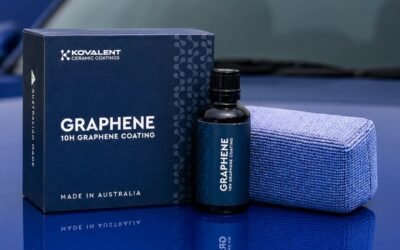
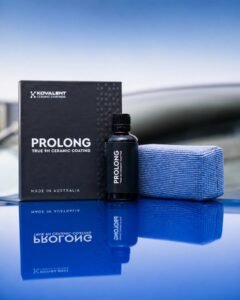
At Kovalent Coatings, we approach surface protection through rigorous molecular science. Our flagship formulas, including our Prolong 9H Ceramic Coating, Graphene Coating, and revolutionary Borophene Coating, are engineered to deliver industry-leading performance:
True 9H Hardness: Offers elite resistance against micro-scratches, wash-induced swirls, and physical friction.
Extreme Chemical Defenses: Completely impervious to harsh environmental contaminants, bird droppings, tree sap, and road salts that easily destroy traditional waxes.
Unrivaled Thermal Resistance: Maintains structural integrity in extreme temperatures exceeding $1,000^\circ\text{F}$ ($537^\circ\text{C}$), meaning it won’t melt or degrade under intense tropical sun.
Frequently Asked Questions
Does ceramic coating last forever?
No coating lasts forever. While it forms a semi-permanent chemical bond with your factory clear coat, it is still a sacrificial layer designed to take the brunt of weather, washing friction, and UV radiation. Over a long period, it will slowly wear down, which is why premium professional systems are rated for defined year ranges (such as 3, 5, or 10 years).
Can you fix a coating that has stopped beading water?
Often, a loss of water beading doesn’t mean the coating is completely gone. It usually means the nano-structure has become “clogged” with a film of microscopic road grime, iron deposits, or mineral spots. A thorough wash using a dedicated iron remover or a mild acidic soap can safely strip away this contamination layer and restore the coating’s original hydrophobicity.
How often should you wash a ceramic coated car?
We highly recommend washing your vehicle once every two weeks. Regular washing removes airborne contaminants before they have a chance to settle and bond to the surface, preserving the self-cleaning properties over the long haul.
Is professional coating worth it over a cheap DIY spray?
Absolutely. Cheap retail spray sealants contain very low concentrations of active polymers and wear off within months. A professional-grade installation relies on highly concentrated, pure formulations that chemically cross-link with your vehicle’s paint, saving you hundreds of hours of reapplication labor over the lifetime of your car.