Protecting a boat from UV damage requires more than regular washing. Prolonged exposure to sunlight can cause gelcoat oxidation, fading, chalking, and surface deterioration. Using a marine ceramic coating, washing your boat regularly, storing it under cover, and following a proper maintenance routine are the most effective ways to preserve its appearance and value.
Key Takeaways
- Marine ceramic coating helps reduce UV damage and oxidation.
- Regular washing removes salt, dirt, and contaminants that accelerate surface deterioration.
- Boat covers and shaded storage provide additional protection.
- Fiberglass and gelcoat surfaces are particularly vulnerable to UV exposure.
- Professional marine detailing helps maintain long-term protection.
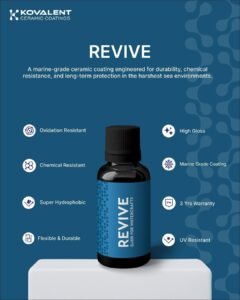
- Kovalent Revive is designed specifically to protect boats and watercraft in harsh marine environments.
Why UV Damage Is a Serious Problem for Boats
Unlike cars that spend much of their time indoors, boats often remain exposed to direct sunlight for extended periods. Whether your vessel is moored at a marina or stored outdoors, constant UV exposure gradually breaks down the protective layer of the gelcoat or painted surface.
Over time, UV damage can lead to:
- Fading colours
- Oxidation
- Chalking
- Loss of gloss
- Surface cracking
- Reduced resale value
Boats operating in sunny coastal regions such as Australia, the USA, UAE, Singapore, Thailand, and the Caribbean are especially vulnerable.
How UV Rays Damage Boat Surfaces
Ultraviolet radiation slowly degrades the resins found in gelcoat and marine paint.
As these materials deteriorate, the surface begins to lose its shine and becomes porous. This allows dirt, salt, moisture, and other contaminants to penetrate more easily, accelerating the ageing process.
Without protection, even well-maintained boats will eventually show signs of UV-related wear.
The Best Ways to Protect a Boat from UV Damage
Apply a Marine Ceramic Coating
One of the most effective ways to reduce UV damage is by applying a marine ceramic coating.
Unlike traditional wax, ceramic coatings form a durable protective layer that helps shield the surface from:
- UV radiation
- Saltwater
- Oxidation
- Bird droppings
- Water stains
- Environmental contaminants
The hydrophobic properties also make cleaning easier, reducing the amount of dirt and salt that remains on the surface.
Wash Your Boat After Every Trip
Salt deposits and airborne contaminants can remain on the surface after every outing.
Rinsing your boat with fresh water and using a marine-safe shampoo helps prevent long-term damage and keeps protective coatings performing at their best.
Store Your Boat Under Cover
Whenever possible, keep your boat:
- Inside a covered marina
- Under a quality boat cover
- In indoor storage
Reducing direct sunlight significantly slows UV-related deterioration.
Schedule Regular Marine Detailing
Professional marine detailing removes oxidation, restores gloss, and prepares the surface for protective coatings.
Regular inspections also help identify early signs of UV damage before they become costly repairs.
Marine Ceramic Coating vs Marine Wax for UV Protection
| Feature | Marine Ceramic Coating | Marine Wax |
| UV Protection | Excellent | Moderate |
| Saltwater Resistance | Excellent | Good |
| Durability | Long-lasting | Short-term |
| Hydrophobic Performance | Excellent | Moderate |
| Cleaning Effort | Minimal | Higher |
| Gloss Retention | Long-lasting | Requires frequent reapplication |
While wax still has a place in marine maintenance, professional ceramic coating for boats offers significantly better long-term protection against UV exposure.
Signs Your Boat Already Has UV Damage
Watch for these common warning signs:
- Dull or faded finish
- Chalky gelcoat
- Uneven colour
- Reduced water beading
- Oxidation
- Surface roughness
If these symptoms appear, professional restoration may be needed before applying a protective coating.
Why Professional Application Makes a Difference
A ceramic coating performs best when applied to a properly prepared surface.
Professional marine detailers typically carry out:
- Deep washing
- Surface decontamination
- Oxidation removal
- Gelcoat correction
- Paint refinement
- Controlled coating application
This preparation helps maximise durability and overall performance.
Why Choose Kovalent Revive for Marine Protection
Unlike products originally developed for automotive use, Kovalent Revive is positioned exclusively as a marine ceramic coating.
It has been developed specifically to help protect:
- Boats
- Yachts
- Fishing vessels
- Personal watercraft
- Marine equipment
Revive helps defend against UV exposure, saltwater, oxidation, and environmental contaminants while maintaining a high-gloss finish and making routine maintenance easier.
Whether you’re a professional marine detailing business, marina operator, yacht maintenance company, or boat owner, Revive provides a marine-focused solution designed for demanding conditions.
Final Thoughts
Sunlight is one of the biggest threats to your boat’s appearance, but UV damage can be significantly reduced with the right maintenance strategy.
Regular washing, covered storage, professional detailing, and a high-quality marine ceramic coating all play an important role in protecting your investment.
For boat owners looking for long-term boat paint protection, Kovalent Revive offers a marine-specific solution designed to help preserve gloss, minimise oxidation, and simplify maintenance in some of the world’s harshest marine environments.
Frequently Asked Questions
Can UV rays damage a boat?
Yes. Prolonged UV exposure can cause oxidation, fading, chalking, and deterioration of gelcoat and painted surfaces.
Does marine ceramic coating protect against UV rays?
Yes. A marine ceramic coating helps create a protective barrier that reduces the impact of UV radiation on marine surfaces.
Is ceramic coating better than wax for boats?
For long-term protection, boat ceramic coating generally provides better UV resistance, durability, and easier maintenance than traditional marine wax.
How often should I wash my boat?
Rinsing your boat with fresh water after every trip and performing regular deep cleaning helps reduce salt buildup and environmental damage.
Can ceramic coating stop oxidation?
A ceramic coating helps reduce the environmental factors that contribute to oxidation, but existing oxidation should be corrected before application.
Is Kovalent Revive only for boats?
Yes. Kovalent Revive is positioned exclusively as a marine coating solution for boats, yachts, and other watercraft.