Your vehicle is a significant investment. However, the moment you drive it off the lot, the environment begins a relentless assault on its exterior. Between the harsh Australian sun, industrial fallout, and acidic bird droppings, your clear coat remains under constant threat.
To preserve that showroom shine and maintain high resale value, owners must look beyond basic waxing. Modern car paint protection has evolved into a high-tech science. Today, professional solutions like car ceramic coating and the advanced graphene ceramic coating offer a shield that bonds with your paint at a molecular level.
This guide explores the ultimate strategies for long-term paint care. We will look at why nanotechnology from leaders like Kovalent Coatings represents the gold standard in automotive preservation.
The Evolution of Paint Preservation
For decades, car enthusiasts relied on Carnauba wax. While wax provides a warm glow, it sits on top of the paint and melts away under high temperatures. In contrast, a ceramic coating for cars creates a permanent or semi-permanent bond with the vehicle’s surface. It does not wash off or break down in the rain.
At Kovalent Coatings, the focus lies in nanotechnology. By utilising Silicon Dioxide (SiO2), these coatings fill the microscopic pores of your factory clear coat. This creates a surface so smooth that contaminants simply cannot find a grip.
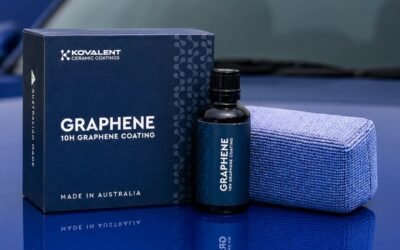
This evolution has led us to the newest frontier: graphene ceramic coating. By infusing graphene oxide into the ceramic matrix, we achieve a layer that is stronger, more flexible, and more resistant to water spotting than any product in history.
Why Your Vehicle Needs a Professional Coating Strategy?
Choosing a car detailing ceramic service is about more than just aesthetics. It is a functional upgrade to your vehicle’s resilience. Here are the primary reasons why high-end coatings are a mandatory part of a modern protection plan:
- UV Ray Defence: Continuous exposure to sunlight causes paint oxidation. This leads to a dull, faded look. A quality coating acts as a sunscreen for your car, blocking harmful rays.
- Chemical Resistance: Tree sap, bug guts, and road salt are highly acidic. Without a barrier, they etch into your paint within hours. Coatings provide a sacrificial layer that resists these chemicals.
- Hydrophobic Performance: This is the “self-cleaning” effect. Water beads up and rolls off the surface, taking dirt and grime with it. This makes your weekly wash significantly easier and safer.
- Enhanced Gloss and Depth: Professional coatings like Kovalent Revive enhance the clarity of your paint, making metallic flakes pop and solid colours look deeper.
Comparing the Titans: Ceramic vs. Graphene
When researching car paint protection, you will likely encounter two main options. Both offer incredible benefits, but they serve different needs.
1. The Power of SiO2 (Ceramic)
Traditional ceramic coatings, such as Kovalent’s Revive and Prolong series, focus on hardness. These products achieve a 9H rating on the pencil hardness scale. This creates a rigid “glass” layer that is exceptionally good at resisting light swirls and providing a mirror-like finish. It is the perfect choice for owners who want a classic, high gloss look with 5 plus years of durability.
2. The Graphene Matrix Innovation
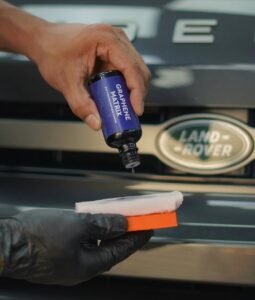
The graphene ceramic coating represents the next generation of surface engineering. Graphene is a single layer of carbon atoms arranged in a honeycomb lattice. It is incredibly thin yet stronger than steel. When added to a car ceramic coating, it reduces the surface temperature of the paint. This is vital in hot climates because it prevents water spots from baking into the surface. Kovalent’s Graphene Matrix offers 7 to 9 years of protection with added flexibility, meaning the coating is less likely to crack under the thermal expansion of the metal panels.
| Feature | Revive (Ceramic) | Graphene Matrix | Borophene |
| Primary Technology | SiO2 Nanotechnology | Graphene Oxide | Boron Nitride |
| Estimated Longevity | 5 Years | 9 Years | 10+ Years |
| Hardness Level | 9H | 10H | 10H+ |
| Heat Resistance | High | Ultra High | Extreme |
| Surface Slickness | Excellent | Superior | Peak Performance |
The Professional Application Process
Many people wonder if they can apply a ceramic coating for cars at home. While consumer-grade sprays exist, they lack the concentration and durability of professional systems. A true car detailing ceramic application involves several critical steps that ensure the bond lasts for years:
- Decontamination Wash: We remove all surface dirt, iron particles, and old waxes.
- Clay Bar Treatment: This removes embedded contaminants from the paint’s pores.
- Paint Correction: This is the most important step. We use machine polishers to remove swirl marks and scratches. Since the coating is transparent, any imperfections left on the paint will be “locked in” and visible.
- Panel Prep: A chemical wipe down ensures the surface is clean and free of polishing oils.
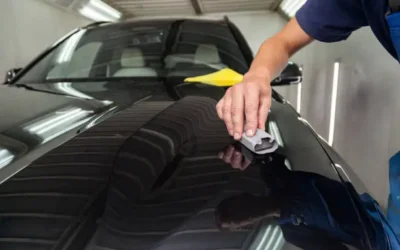
- Coating Application: The installer applies the liquid coating in small sections, allowing it to flash before levelling it with high-quality microfiber towels.
Long-Term Maintenance: How to Protect Your Protection?
Even the best graphene ceramic coating requires proper care. You cannot simply coat a car and ignore it for five years. To maximise the life of your car’s paint protection, follow this routine:
- The First Two Weeks. The coating needs time to fully cross-link and harden. During the first 14 days, avoid washing the car with soap. If bird droppings land on the car, gently spot clean them with water and a soft towel.
- The Two Bucket Wash Method: Never take a coated car through a brush car wash. These “scratch machines” will eventually abrade the coating. Instead, use two buckets: one with pH-neutral shampoo and one with plain water to rinse your wash mitt. This prevents you from rubbing dirt back onto the paint.
- Periodic Decontamination: Every six to twelve months, you should visit a professional for a “decontamination wash.” This removes stubborn minerals or industrial fallout that might be clogging the hydrophobic properties of the coating.
- Using Toppers and Boosters: Products like Kovalent Overlay act as a “booster.” Applying these every few months adds a fresh layer of slickness and ensures the base car ceramic coating remains at peak performance.
Why Choose Kovalent Coatings?
Kovalent Coatings stands out because we do not rely on white-label products. We engineer our formulas specifically for the harshest environments. Our graphene ceramic coating utilises a specialised Graphene Oxide dispersion that offers a 10H hardness, surpassing standard industry benchmarks.
Our Borophene technology even takes things a step further by using Boron Nitride. This provides a 10 micron thickness that creates a literal physical barrier between your car and the world. When you choose a ceramic coating for cars from our lineup, you are choosing a product tested for chemical resistance, gloss retention, and extreme durability.
Conclusion
A comprehensive protection strategy is the only way to keep a modern vehicle looking its best. By combining a professional car detailing ceramic application with a disciplined maintenance routine, you ensure your paint remains vibrant for a decade or more. Whether you prefer the classic brilliance of a car ceramic coating or the high-tech resilience of a graphene ceramic coating, the goal remains the same: total peace of mind.
Are you ready to give your vehicle the ultimate shield? Explore the full range of nanotechnology solutions at Kovalent Coatings and find a certified applicator who can transform your driving experience. Protect your investment today so you can enjoy it for years to come.
FAQs
1. How long does a professional graphene ceramic coating truly last?
While consumer sprays might only last a few months, a professional-grade graphene ceramic coating from Kovalent Coatings provides durability for 7 to 9 years. The exact lifespan depends on your maintenance routine and whether the vehicle is garaged or exposed to the elements daily.
2. Can I apply a ceramic coating for cars over a wax or sealant?
No, you must remove all existing waxes and sealants before application. A car ceramic coating requires a clean, bare surface to form a molecular bond with the paint. If applied over wax, the coating will simply slide off when the wax melts or degrades.
3. Does car paint protection prevent all rock chips and scratches?
Coatings offer excellent resistance against light swirl marks and micro-abrasions caused by washing. However, they are not thick enough to stop heavy rock chips at high speeds. For that level of protection, many owners combine a coating with a Paint Protection Film (PPF).
4. Is a graphene ceramic coating better than a standard car ceramic coating?
Both provide elite protection, but graphene offers specific advantages in heat dissipation. This reduces the risk of water spotting in hot climates. Graphene also tends to be slightly more flexible, making it ideal for the expanding and contracting metal panels on high-performance vehicles.
5. How soon can I wash my vehicle after a car detailing ceramic service?
You should wait at least seven days before performing a full soapy wash. This allows the nanostructures to fully cross-link and harden. If the car gets dusty or wet during the first week, dry it very gently with a high-quality microfiber towel.