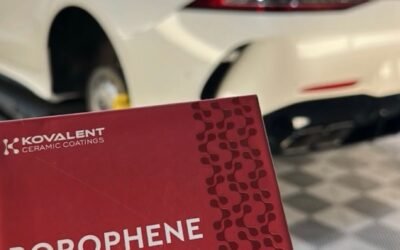
Protecting a vehicle in India is a unique challenge. Between the corrosive coastal air, the alkaline dust of the plains, and the high-decibel chaos of city traffic, your car’s paint is constantly under siege. To maintain that “new car” feel, enthusiasts are turning toward advanced chemical protection.
At Kovalent Coatings, we utilise Australian-engineered nanotechnology to create barriers that don’t just sit on top of the paint but become part of it. Below, we explore whether car ceramic coating or graphene ceramic coating is the right choice for your driving conditions.
What is Car Ceramic Coating?
A ceramic coating for cars is a high-grade liquid polymer that utilises Silicon Dioxide (SiO2) to create a hard, protective layer. When applied by a professional, this liquid fills the microscopic pores of your car’s clear coat.
At Kovalent Coatings, our Prolong 9H is a standout in the car detailing ceramic world. It features a sophisticated dual-particle system:
- 20nm Particles: These create a thick, durable structural base on the paint.
- 5nm Particles: These smaller particles migrate to the surface to create a high-density, super-hydrophobic finish.
This combination ensures that UV rays from the harsh Indian sun do not oxidise the paint, preventing that dull, faded look common in older vehicles.
What is Graphene Ceramic Coating?
While ceramic has been the gold standard, graphene ceramic coating represents the next leap in carbon-based technology. This coating is essentially a ceramic base infused with Graphene Reduced Oxide.
Graphene is a single layer of carbon atoms arranged in a honeycomb lattice. It is 200 times stronger than steel yet incredibly flexible. Our Kovalent Graphene Nano Coating achieves a 10H hardness rating, providing a more resilient shield against the mechanical wear and tear of highway driving.
| Feature | Car Ceramic Coating (9H) | Graphene Ceramic Coating (10H) |
| Durability | 3 to 5 Years | 5 to 7+ Years |
| Surface Hardness | High (9H) | Ultra-High (10H) |
| Water Beading | Excellent | Superior |
| Chemical Resistance | Strong (pH 2–12) | Maximum (pH 1–14) |
| Heat Dissipation | Standard | High (Reduces water spotting) |
| Anti-Static | Moderate | High (Repels dust better) |
Why Graphene Wins on Indian Roads?
Indian driving conditions present three specific problems where graphene ceramic coating offers a distinct advantage over traditional ceramic coating for cars.
The Water Spotting Issue
During the Indian monsoon, rain is often followed by intense sunlight. Traditional ceramic coatings can retain heat, causing water droplets to evaporate quickly and leave mineral deposits (water spots) etched into the coating. Graphene is a thermal conductor; it lowers the surface temperature of the car, which significantly reduces the chance of water spots “baking” onto your hood.
Dust and Static Electricity
India is a dusty environment. Traditional car detailing ceramic can sometimes develop a slight static charge that attracts fine dust particles. Graphene is naturally anti-static. This means your car stays cleaner during those dusty summer months in Northern and Western India.
Industrial Pollution and Bird Droppings
In high-pollution zones like Delhi-NCR or industrial hubs like Pune, the air contains acidic particulates. Graphene’s chemical resistance is nearly unrivalled, protecting your paint from “staining” caused by bird droppings or acidic tree sap that would otherwise eat through a standard wax or sealant.
Final Verdict
If you are looking for the best value and park your car in a garage, a car ceramic coating like Kovalent Prolong 9H is an incredible investment. However, if you drive a dark-colored car in a high-heat, high-pollution Indian city, upgrading to a graphene ceramic coating provides the extra thermal and chemical protection needed to keep your vehicle looking showroom-ready for the next decade.
Visit Kovalent Coatings to find your nearest certified applicator today.
FAQs
Q1: Is graphene better than ceramic for my car?
Graphene offers higher hardness (10H), better heat dissipation to prevent water spots, and stronger anti-static properties, making it slightly superior for cars parked outdoors in India.
Q2: How long does a car ceramic coating last?
A high-quality ceramic coating for cars, like Kovalent Prolong 9H, typically lasts between 3 and 5 years, depending on maintenance and environmental exposure.
Q3: Can I wash my car normally after a car detailing ceramic service?
Yes, but you should avoid harsh alkaline soaps. Use a pH-neutral shampoo to preserve the hydrophobic top layer of the coating.
Q4: Does graphene coating prevent scratches?
No coating is “scratch-proof,” but both graphene ceramic coating and 9H ceramic provide significant resistance against light swirl marks and “spider-webbing” caused by improper washing.
Q5: Why is ceramic coating expensive in India?
The cost covers professional paint correction (polishing out defects), the high-quality imported nanotechnology, and the labour-intensive application process required for a long-lasting bond.
Q6: Is graphene coating waterproof?
It is “hydrophobic,” meaning it repels water. Water beads up into tight spheres and rolls off the surface, taking dirt with it, a process known as the “self-cleaning effect.”
Q7: Can I apply a ceramic coating over a graphene coating?
Generally, no. Graphene is usually the top-tier “final” layer. You can, however, use a ceramic-based maintenance spray to “top up” the slickness of either coating.