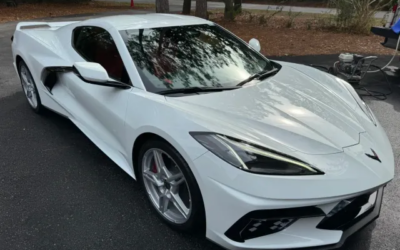
Every car enthusiast knows the struggle of maintaining a pristine finish. Traditional waxing offers a temporary solution, but modern environmental hazards demand a more robust defence. This is where ceramic coating for cars changes the game. Unlike wax, which sits on top of the paint, a car ceramic coating forms a permanent or semi-permanent bond with the vehicle’s surface, creating a sacrificial layer that does not wash away or break down under high heat.
The Science of Surface Defence: What is Ceramic Coating?
At its core, a ceramic coating is a liquid polymer typically composed of Silicon Dioxide (SiO2), often derived from quartz or sand. When applied to a car’s exterior, the chemicals react with the factory clear coat to create a hydrophobic (water-repelling) surface. This technology stems from advanced nanotechnology, where particles as small as 5 to 20 nanometers fill the microscopic pores of the paint.
In recent years, the industry has seen the rise of graphene ceramic coating. Graphene, a single layer of carbon atoms arranged in a hexagonal lattice, offers even higher tensile strength and better heat dissipation than traditional silica-based coatings. These car detailing ceramic solutions provide a level of hardness measured on the Mohs scale, often reaching a 9H or 10H rating. This means your car is protected by a layer nearly as hard as a diamond, shielding it from minor abrasions and chemical etchings.
Why Traditional Wax is No Longer Enough?
For decades, carnauba wax was the gold standard. However, wax has a low melting point and a short lifespan. In hot climates, wax can literally melt off your car in a matter of hours. Furthermore, wax offers zero protection against acidic contaminants like bird droppings or tree sap. Ceramic coating for cars, however, is chemically resistant. It can withstand pH levels from 2 to 12, ensuring that harsh detergents or acidic rain do not damage the underlying paint.
While wax lasts for weeks, a professional car ceramic coating can protect your investment for 5 to 9 years, depending on the specific product and maintenance routine.
How It Protects Your Paint: From UV Rays to Chemical Stains?
The primary enemy of automotive paint is the sun. Ultraviolet (UV) rays cause oxidation, leading to a dull, faded appearance known as “chalking.” A car ceramic coating acts as a UV filter, reflecting harmful rays and preserving the original pigment depth. This is especially critical for dark-coloured vehicles, which absorb more heat and radiation.
Beyond sun protection, the hydrophobic nature of car detailing ceramic means that water-based dirt and grime do not easily adhere to the surface. When water hits the coating, it beads into tight spheres and rolls off, taking surface contaminants with it. This “self-cleaning” effect drastically reduces the time and effort required for maintenance washes.
Investing in Quality: The ROI of Ceramic Protection
When considering the cost of car ceramic coating, it is essential to look at the long-term Return on Investment (ROI). A high-quality coating preserves the vehicle’s resale value by keeping the paint in showroom condition. Furthermore, it eliminates the need for quarterly waxing and professional polishing, saving hundreds of dollars in detailing fees over the car’s lifetime.
For those looking for the absolute pinnacle of technology, graphene ceramic coating offers an even more durable finish with reduced water spotting. Graphene’s electrical and thermal conductivity prevents dust from sticking through static electricity and helps the surface stay cooler under direct sunlight.
The Importance of Professional Application
While DIY kits exist, car detailing ceramic is a professional-grade product that requires meticulous preparation. The process involves multiple stages of decontamination, followed by paint correction to remove existing swirls and scratches. If a coating is applied over a scratch, that scratch is “locked in” under the ceramic layer. Professionals also ensure that the coating “flashes” correctly and is levelled perfectly to avoid “high spots” or uneven reflections.
FAQs
- Does ceramic coating prevent all scratches?
No. While it adds a layer of hardness that resists light swirl marks from washing, it cannot stop deep scratches from keys or heavy rock impacts. It acts as a sacrificial layer to protect the original factory finish.
- How often do I need to wash a coated vehicle?
You should wash the vehicle every one to two weeks using a pH-neutral shampoo. This prevents the accumulation of environmental traffic film that can temporarily hide the coating’s water-beading properties.
- Can I apply ceramic coating myself?
Consumer-grade kits exist, but professional-grade coatings require controlled environments and expert paint correction. Improper application can lead to high spots or dark streaks that require mechanical sanding to remove.
- Is it worth the investment for older cars?
Absolutely. Provided the paint remains in good condition, a coating can rejuvenate the look of an older vehicle and prevent further degradation, effectively halting the aging process of the exterior surfaces.
- Does the coating require “reloading”?
Many manufacturers recommend a silica spray or maintenance booster every 6 to 12 months. This replenishes the top hydrophobic layer and maintains the surface’s slick feel.
- Can I go through an automatic car wash?
It is highly recommended to avoid automatic brush washes. The stiff bristles can still mar the coating over time. Touchless washing or hand washing is the preferred method for maintaining a coated vehicle.